Physical Address
304 North Cardinal St.
Dorchester Center, MA 02124
Physical Address
304 North Cardinal St.
Dorchester Center, MA 02124

Practical Experience. Strategic Vision. Better Policy

Practical Experience. Strategic Vision. Better Policy
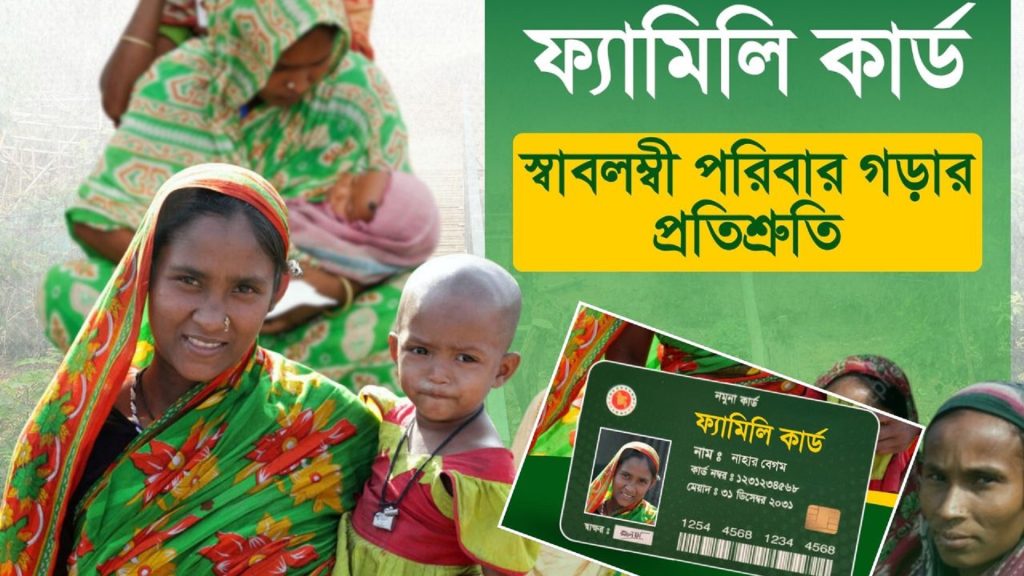
One of the key priorities in the new government’s electoral commitments has been the introduction of social protection initiatives such as the Family Card, and implementation has begun successfully within the first month of assuming office. Programmes like the Family Card are not merely populist measures; rather, they have the potential to strengthen the country’s socio-economic structure from within and significantly improve the living standards of vulnerable populations.
However, past experience with social protection programmes in Bangladesh has not been reassuring. A report jointly published by the Government of Bangladesh and the United Nations Development Programme indicates that 62.8% of beneficiaries of these programmes are neither poor nor vulnerable, while only 6.6% are extremely poor. At the same time, 64–69% of poor households receive no government support at all (From Strategy to Impact: Assessment of Bangladesh’s Social Security Policy Support Programme).
This implies a serious mismatch: nearly two-thirds of the poor are excluded from support, while two-thirds of beneficiaries are not poor. Issues such as corruption and political influence in beneficiary selection further aggravate the situation. Moreover, the current benefit levels are very low, raising questions about their effectiveness in reducing poverty—for example, old-age and widow allowances are only BDT 700 per month.
In addition, the number of programmes is excessively high and fragmented. In the current fiscal year alone, there are 95 social security programmes/schemes. Different ministries often implement overlapping programmes with little coordination, leading to duplication of efforts and inefficient use of public resources.
Another major weakness of Bangladesh’s social protection system is its heavy reliance on government financing. Citizens do not contribute to these programmes; the entire funding comes from the national budget, financed through taxpayers’ money. Nearly 15% of the national budget is allocated to social protection. This creates significant fiscal pressure while also fostering a perception among beneficiaries that these are government handouts, potentially increasing dependency.
In this context, the Family Card initiative presents an opportunity to reform and rationalize the system. Poverty reduction in Bangladesh is fundamentally family-centered, and the Family Card can help reorganize support around households. This would help avoid situations where some families receive multiple benefits while others receive none. It also opens the possibility of consolidating numerous fragmented programmes into a smaller, more coherent set.
At the same time, the initiative poses a significant risk: since Family Card benefits are three to four times higher than many existing programmes, any targeting errors could result in substantially greater fiscal losses.
To ensure that social protection programmes effectively contribute to improving people’s welfare, the following measures are recommended:
1. Strengthen Targeting through Interoperability
The beneficiary selection process must ensure that support reaches the poorest. Currently, the Proxy Means Test (PMT) is widely used, but it is easily manipulated. Applicants can infer “correct” answers to questions about assets (e.g., land ownership or vehicle ownership) and respond accordingly, undermining accuracy.
A more effective and cost-efficient approach in Bangladesh would be to verify applicants’ socio-economic status using interoperable government databases. For example:
Encouragingly, the government has already developed a Single Registry system, which is linked with many of these databases. Mandatory use of such interoperability for verification should be implemented across all programmes.
2. Increase Public Awareness and Transparency
Lack of awareness is a major contributor to irregularities. Information on available programmes, eligibility criteria, benefit levels, and application processes is not widely disseminated.
Leveraging social media and mass communication channels can significantly improve transparency. When citizens are well informed, it becomes much harder to allocate benefits to ineligible individuals.
3. Gradually Introduce Contributory Social Protection
Programmes such as unemployment benefits or old-age allowances should gradually incorporate contributory elements. Working citizens could enroll and make regular contributions, becoming eligible for benefits upon unemployment or reaching a certain age, with the government co-financing part of the benefit.
Such schemes can be opened to all segments of society, while existing non-contributory programmes continue alongside newly introduced contributory versions.
4. Shift Toward Health Insurance-Based Protection
For low- and middle-income households, the most severe economic shocks often arise from health crises such as heart disease, stroke, and cancer. Current support—e.g., a one-time grant of BDT 50,000 for about 60,000 patients annually—is inadequate.
Instead of fragmented cash assistance, a more effective approach would be to expand health insurance coverage for all, with special packages for the vulnerable populations. Successful models from neighboring regions demonstrate that pooled risk mechanisms can provide more comprehensive and sustainable protection.
n this model, financial support for healthcare should be directed to service providers rather than given as cash to beneficiaries. Health insurance schemes can reimburse hospitals directly for services rendered, ensuring better targeting, accountability, and quality of care. Robust management information systems (MIS) should be deployed to enable seamless verification and automated payments, thereby improving efficiency and reducing leakage.
5. Establish a Robust Family Identification System
To ensure the successful implementation of the Family Card system, it is essential to accurately identify families and their members. In Bangladesh, there are currently two forms of citizen identification: the birth registration number and the national identity card (NID). The NID is widely used for formal transactions such as bank accounts, income tax, land registration, and vehicle ownership. However, it is issued only to individuals aged 18 and above, which makes it difficult to construct a comprehensive and functional family database.
As a result, developing an effective family tree–based database remains a challenge. To address this gap, a law was enacted in 2023 to introduce a Unique ID system. Under this framework, every citizen would be assigned a Unique ID at the time of birth registration, modeled on the national ID system. The existing NID would serve as the Unique ID for adults.
Accelerating the rollout of this Unique ID system is therefore critical to enabling accurate family identification and strengthening the effectiveness of social protection programs such as the Family Card.
6. Strengthen Grievance Redress Mechanisms
An effective grievance redress system is essential to reduce irregularities and ensure accountability. Citizens must be able to easily lodge complaints, and information on complaints and their resolution should be publicly accessible.
Such transparency would enable citizens, journalists, and civil society to identify irregularities—for example, if ineligible individuals receive Family Card benefits—and prompt timely corrective action.
Conclusion
The Family Card initiative offers a critical opportunity to reform Bangladesh’s social protection system. With improved targeting, better coordination, enhanced transparency, and gradual structural reforms, these programmes can move beyond short-term assistance and become powerful tools for sustainable poverty reduction and socio-economic transformation.
The writer is an expert in Management Information Systems, Social Protection, and Public Finance Management. He may be contacted at amohaimen@gmail.com